
CHANNELDRAW — FIELD NOTES #01
January–March 2026 Drawing, journalism and the politics of visibility

I begin this first field note not as a report, but as a trace.
Between January and March 2026, my work moved across newspapers, museum spaces, universities, public walls and editorial platforms. What connects these places is not geography or format, but a recurring question: who controls visibility, and under what conditions?
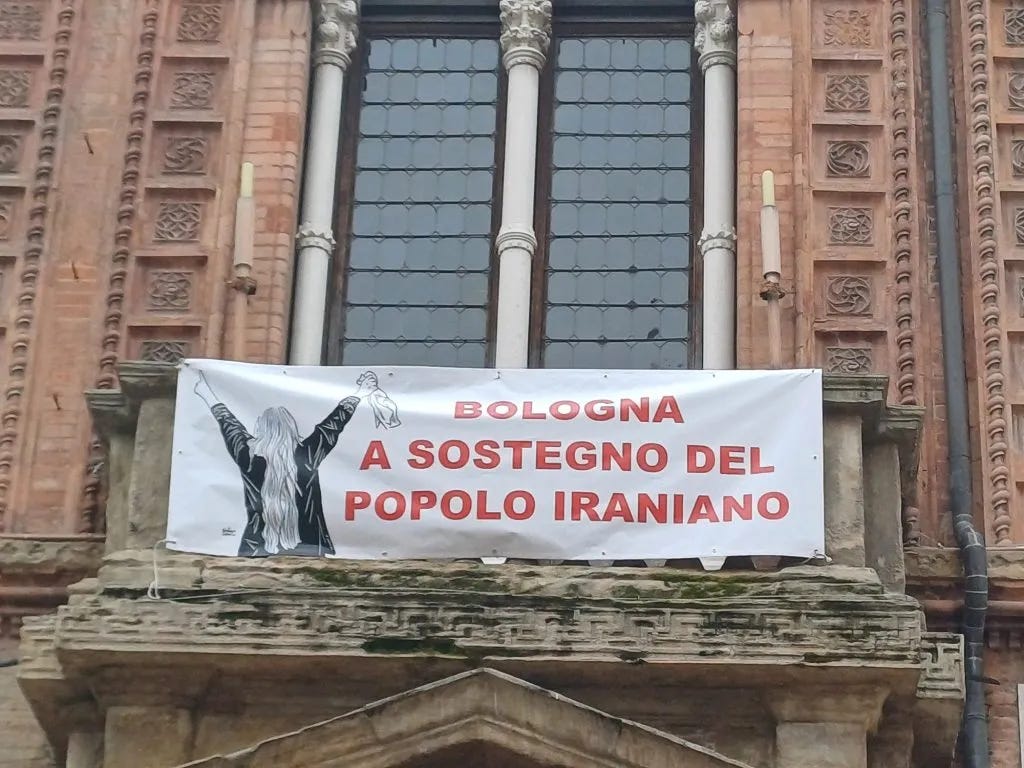
In January, a banner was installed on the façade of Palazzo d’Accursio in Bologna, Italy. The drawing was dedicated to the Iranian people.
It was not conceived as illustration, but as public inscription — a drawing that leaves the page and enters civic space, where meaning is not contained but exposed.
Around the same period, the work entered institutional contexts that frame comics and drawing in different ways.
In Portland, United States, I participated in Museum Pop-Up, curated by Kate Kelp-Stebbins at the Northwest Museum of Cartoon Arts. In Turin, Italy, my solo exhibition Diario segreto di Pasolini was presented at Volere la luna.
These two contexts — a collective exhibition in the United States and a solo show in Italy — reflect different conditions of visibility: drawing as archive, and drawing as authorial narrative space.
In parallel, a significant part of this period was dedicated to editorial illustration and graphic journalism.
Work published includes Cartoline da Minneapolis (text by Laura Cappon, Internazionale), visual contributions to the Committee to Protect Journalists report 330 Journalists Remain Behind Bars, and editorial illustrations for international publications including Dartmouth Alumni Magazine in the United States and Corriere della Sera in Italy.
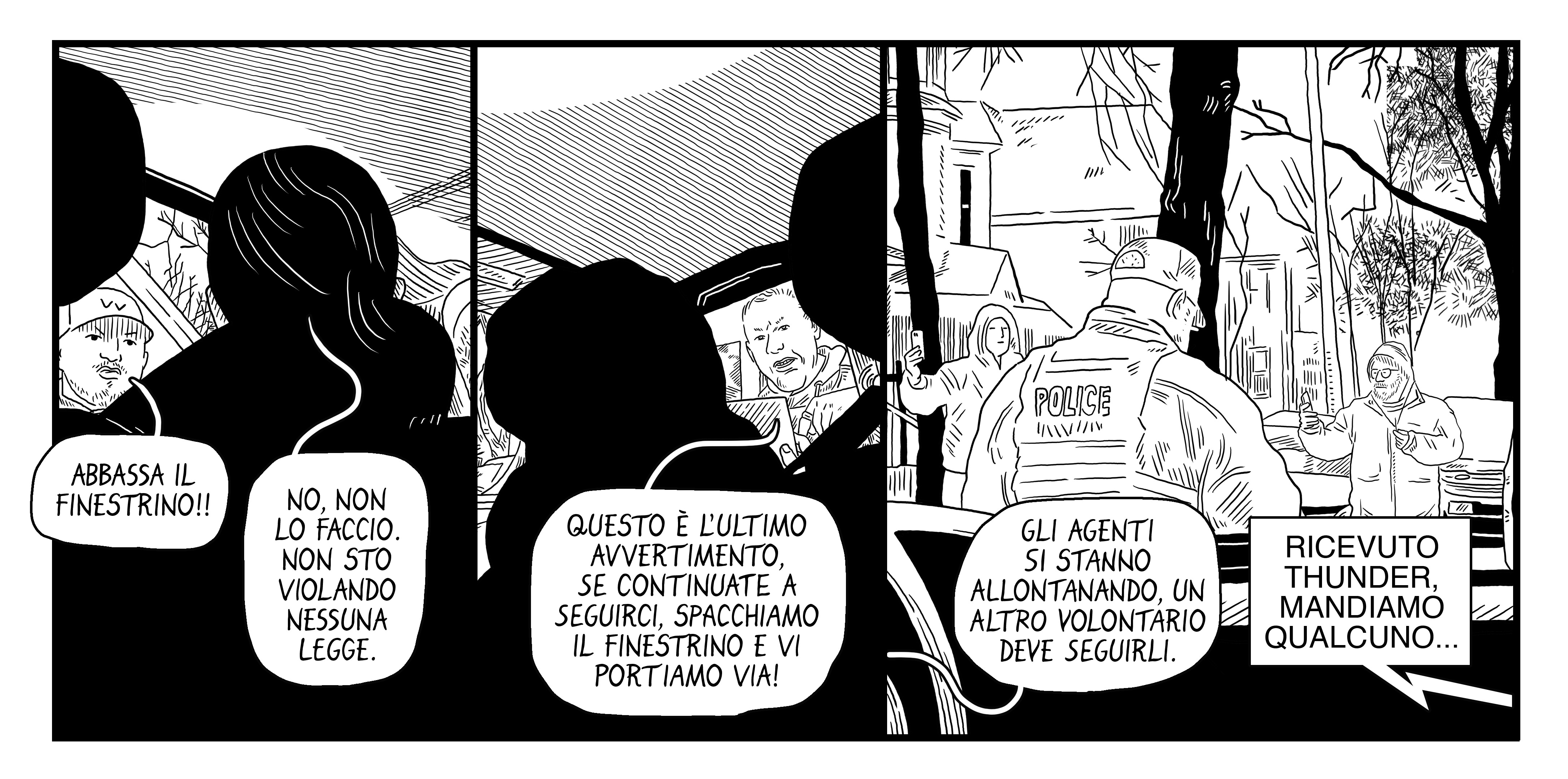
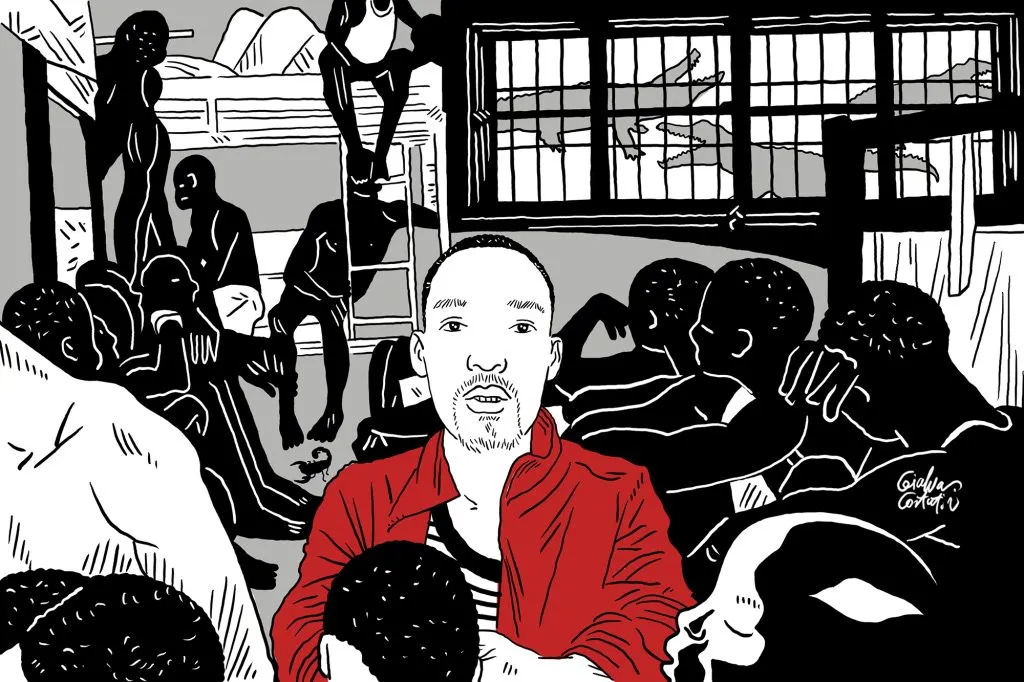
Across these works, a recurring subject emerges: journalism under pressure — and the fragile conditions under which information is produced, controlled, or suppressed.
Keep reading with a 7-day free trial
Subscribe to Channeldraw to keep reading this post and get 7 days of free access to the full post archives.